Embroidery 
Embroidery is the art or handicraft of decorating fabric or other materials with designs stitched in strands of thread or yarn using a needle. Embroidery may also incorporate other materials such as metal strips, pearls, beads, quills, and sequins. more...
Types of embroidery
Embroidery is classified according to its use of the underlying foundation fabric. One classification system divides embroidery styles according to the relationship of stitch placement to the fabric:
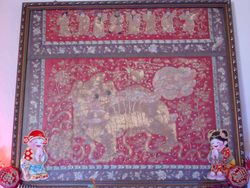
- In free embroidery, designs are applied without regard to the weave of the underlying fabric. Examples include crewel and traditional Chinese embroidery.
The most ornate and tedious form of embroidery is the Zardosi workmanship mainly originating from India. This form uses metal thread instead of the ususal silk or rayon. The fabric, usually silk or velvet, is marked with the pattern and then the craftsman covers the pattern with metal thread embellishing it with stones or beads.
Another form of embroidery from India is the Ari work. This work is done by stretching the fabric on a frame and creating the stiches from a long a needle. The needle also carries sequence, beads, and other embelishments to decorate the pattern.
As a matter of fact India has almost 72 forms of embroidery original to every region.
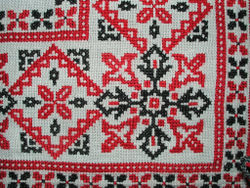
- In counted-thread embroidery, patterns are created by making stitches over a pre-determined number of threads in the foundation fabric. Counted-thread embroidery is more easily worked on an even-weave foundation fabric such as embroidery canvas, aida cloth, or specially woven cotton and linen fabrics although non-evenweave linen is used as well. Examples include needlepoint and cross-stitch.
A second division classifies embroidery according to whether the design is stitched on top of or through the foundation fabric:
Read more at Wikipedia.org